Product Analysis: A Complete Guide to Understanding and Improving Your Products
In today’s competitive market, creating a good product is only the beginning. Businesses also need to understand how their products perform, what customers think about them, and where improvements are needed. This is where product analysis becomes important.
Product analysis is the process of examining a product from different perspectives to understand its strengths, weaknesses, performance, customer value, and position in the market. It can help businesses make smarter decisions before launching a product and continue improving it after it reaches customers.
Whether you run an online store, manage a software company, develop physical products, or work in marketing, understanding product analysis can give you valuable insights. Instead of making decisions based only on assumptions, businesses can use real information to determine what works and what needs to change.
What Is Product Analysis?
Product analysis is a detailed evaluation of a product to determine how well it meets customer needs and business goals. It can include studying the product’s features, quality, pricing, usability, customer feedback, sales performance, competitors, and overall market demand.
The purpose is not simply to find problems. A good product analysis also identifies opportunities for growth.
For example, imagine a company sells a fitness app. Its product analysis may reveal that customers love the workout library but find the navigation confusing. The company can then focus on improving the user interface instead of spending money developing features that customers do not really need.
In simple terms, product analysis helps answer an important question: Is the product delivering the value customers expect, and how can it become better?
Why Is Product Analysis Important?
Product analysis is valuable because markets and customer expectations are constantly changing. A product that performs well today may become less attractive if competitors introduce better alternatives or customer preferences change.
One major benefit is better decision-making. Businesses can use product data and customer feedback to make decisions based on evidence rather than guesswork.
It can also help companies understand their customers. By analyzing reviews, surveys, purchasing behavior, and support requests, businesses can discover what customers appreciate and what frustrates them.
Another advantage is identifying weaknesses early. If a product has a high return rate, poor reviews, or low customer retention, analysis can help identify the reasons behind these problems.
Product analysis can also improve profitability. When businesses understand which features or products generate the most value, they can focus their resources on areas with the greatest potential.
Key Elements of Product Analysis
Product analysis can cover many areas, depending on the type of product and the goals of the business. However, several elements are commonly considered.
1. Product Features
The first step is often examining the product itself. Businesses should consider whether its features solve real customer problems and whether those features are easy to understand and use.
Adding more features does not automatically make a product better. Sometimes, a simple product with a clear purpose can provide a much better customer experience than a complicated one.
2. Product Quality
Quality plays an important role in customer satisfaction. For physical products, this may include materials, durability, design, safety, and manufacturing standards.
For digital products, quality can involve speed, reliability, security, functionality, and ease of use.
Poor quality can quickly damage a brand’s reputation, especially when customers share negative experiences online.
3. Customer Feedback
Customer feedback is one of the most useful sources of information during product analysis. Reviews, ratings, surveys, emails, support tickets, and social media comments can reveal problems that internal teams may not notice.
Businesses should look for patterns rather than focusing on one isolated comment. If many customers complain about the same issue, it may indicate a problem that deserves attention.
4. Pricing
Price can strongly influence purchasing decisions. Product analysis should determine whether the price matches the product’s quality, benefits, and perceived value.
Businesses can also compare their pricing with competitors. However, the cheapest product is not always the most attractive option. Customers may be willing to pay more for better quality, convenience, customer service, or unique features.
5. Competitor Analysis
Understanding competitors is another important part of product analysis. Businesses should examine similar products to see what competitors offer, how they position their products, what customers say about them, and how their pricing compares.
This can help a company discover gaps in the market. Instead of copying competitors, businesses can use these insights to develop a stronger and more distinctive value proposition.
How to Conduct Product Analysis
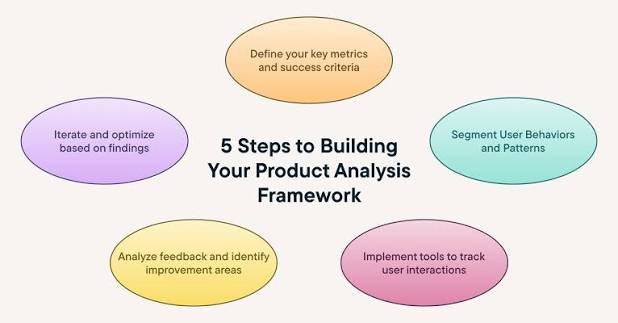
A structured approach can make product analysis more effective. The exact process depends on the business, but the following steps provide a useful starting point.
Step 1: Define Your Objective
Before collecting information, determine what you want to learn. Are you trying to improve an existing product, prepare for a launch, reduce returns, increase sales, or understand customer dissatisfaction?
A clear objective keeps the analysis focused.
Step 2: Collect Relevant Data
Gather information from multiple sources. This might include sales data, customer reviews, surveys, website analytics, support conversations, competitor research, and product usage statistics.
Using several sources can provide a more complete picture.
Step 3: Identify Patterns
Once the information has been collected, look for repeated trends. For example, customers may repeatedly mention that a product is difficult to set up, too expensive, or missing a useful feature.
At the same time, identify positive patterns. Understanding what customers already love about a product can help businesses protect its strongest qualities.
Step 4: Compare the Product With Competitors
Look at similar products and compare important factors such as features, pricing, quality, design, customer experience, and reputation.
The goal is to understand where your product stands rather than simply finding the biggest competitor.
Step 5: Develop an Improvement Plan
After identifying opportunities and problems, prioritize them. Not every issue needs to be fixed immediately.
Consider the potential impact, cost, customer importance, and difficulty of each improvement. This makes it easier to focus on changes that can produce meaningful results.
Common Mistakes in Product Analysis
Although product analysis can provide valuable information, businesses can still make mistakes.
One common mistake is relying on assumptions. A team may believe customers want a particular feature without actually checking customer data.
Another mistake is focusing only on competitors. Competitor research is useful, but a product should ultimately be designed around the needs of its target customers.
Ignoring negative feedback is another problem. Negative reviews can be uncomfortable, but they may contain some of the most useful information for improving a product.
Businesses should also avoid analyzing too much data without a clear purpose. Collecting large amounts of information is not useful if the company does not know what decisions it needs to make.
Product Analysis and Business Growth
Effective product analysis can contribute directly to business growth. When companies understand their products and customers better, they can make improvements that increase satisfaction and loyalty.
For example, improving a confusing checkout process may increase conversions. Fixing a recurring product problem may reduce returns. Adding a genuinely valuable feature may improve customer retention.
Product analysis can also help businesses decide whether to continue investing in a product. If a product has strong demand and positive customer feedback, additional investment may make sense. If demand continues to decline despite improvements, the company may need to reconsider its strategy.
The key is to treat product analysis as an ongoing process rather than a one-time task.
Frequently Asked Questions About Product Analysis
What is product analysis in simple words?
Product analysis is the process of studying a product to understand how well it meets customer needs and business objectives. It looks at areas such as quality, features, price, customer feedback, sales, and competition.
Why is product analysis important?
Product analysis helps businesses make informed decisions. It can reveal customer needs, identify product weaknesses, improve customer satisfaction, and help companies find opportunities for growth.
What should be included in a product analysis?
A product analysis can include product features, quality, pricing, customer feedback, sales performance, competitors, target customers, usability, and market demand.
How often should a business conduct product analysis?
There is no single schedule that works for every business. However, product analysis should be an ongoing process. Businesses should review performance regularly and conduct deeper analysis whenever there are major changes in customer behavior, competition, or market conditions.
Can product analysis help increase sales?
Yes. By identifying customer needs, pricing problems, product weaknesses, and opportunities for improvement, product analysis can help businesses make changes that may improve conversions, customer satisfaction, and retention.
What is the difference between product analysis and competitor analysis?
Product analysis focuses primarily on evaluating a company’s own product, while competitor analysis examines competing products and businesses. Both can be used together to understand market position and identify opportunities for improvement.
Is product analysis useful for small businesses?
Absolutely. Small businesses can benefit significantly from product analysis because it helps them understand their customers and use limited resources more effectively. Even basic customer feedback and sales data can provide useful insights.
What is the main goal of product analysis?
The main goal is to understand how well a product performs and how it can be improved. Ultimately, product analysis aims to create greater value for customers while supporting the business’s goals.
Final Thoughts
Product analysis is an essential part of building, launching, and improving successful products. It allows businesses to understand what customers need, evaluate product performance, identify weaknesses, and discover new opportunities.
A strong analysis combines customer feedback, product data, competitor research, pricing information, and market trends. Most importantly, the information gathered should lead to practical action.
Businesses that regularly analyze their products are better positioned to adapt to changing customer expectations and market conditions. Instead of simply hoping a product succeeds, they can continuously learn, improve, and create more value for their customers.