Intelligent Systems: How Smart Technology Is Changing the Modern World
Technology has changed the way people live, work, communicate, and make decisions. Among the most important developments in modern technology are Intelligent Systems. These systems are designed to collect information, understand patterns, make decisions, and respond to changing situations with little or no human intervention. From smartphones and virtual assistants to smart factories and advanced healthcare tools, intelligent technology is becoming part of everyday life.
Unlike traditional computer programs that simply follow fixed instructions, intelligent systems can often learn from data and improve their performance over time. This ability makes them useful in situations where conditions are constantly changing and decisions need to be made quickly. As artificial intelligence, machine learning, sensors, and data processing continue to develop, intelligent systems are becoming more capable and widely used across different industries.
What Are Intelligent Systems?
Intelligent Systems are computer-based technologies that can perform tasks that normally require some level of human intelligence. These tasks may include learning, reasoning, recognizing patterns, understanding language, solving problems, and making predictions.
An intelligent system usually combines several technologies. Artificial intelligence provides the ability to process information and make decisions, while machine learning allows a system to identify patterns from data. Sensors can help a system understand its surroundings, and advanced software can determine what action should be taken based on the available information.
A simple example is a smart thermostat. A traditional thermostat may turn heating or cooling on and off according to a temperature selected by the user. A smarter system can consider temperature changes, user preferences, schedules, and other information to automatically adjust the environment. In this way, it is not simply following one fixed instruction; it is responding to information and making a decision.
How Do Intelligent Systems Work?
The way an intelligent system works depends on its purpose, but most systems follow a basic process. First, the system collects data from different sources. This information may come from sensors, databases, cameras, websites, devices, or user interactions.
Next, the system processes the collected information. Algorithms analyze the data and search for meaningful patterns or relationships. In machine-learning-based systems, models may have been trained using large amounts of historical data so they can recognize situations and make predictions.
After analyzing the information, the system produces an output or takes an action. For example, a recommendation system may suggest a product, while an autonomous machine may change its movement based on what its sensors detect.
Many modern systems also learn from new information. When they receive additional data, their models can sometimes be updated or improved. This makes them more flexible than conventional software that always performs the same operation.
Key Features of Intelligent Systems
Several characteristics make intelligent systems different from ordinary software applications.
Learning ability is one of the most important features. Machine learning enables systems to identify patterns in data and improve their results as they receive more information.
Decision-making is another major capability. Intelligent systems can evaluate multiple pieces of information and select an appropriate response based on predefined rules or learned patterns.
Adaptability allows these systems to respond when circumstances change. For example, a smart traffic system can adjust signals according to current traffic conditions rather than relying entirely on a fixed schedule.
Automation is also important. Intelligent technology can perform repetitive or complex tasks with limited human involvement, saving time and reducing manual effort.
Finally, many intelligent systems have some form of interaction. They can communicate with people through voice, text, images, or other interfaces, making advanced technology easier to use.
Applications of Intelligent Systems
Intelligent technology has applications in almost every major industry.
Healthcare
Healthcare is one of the areas where intelligent systems can provide significant benefits. AI-powered tools can analyze medical images, identify patterns in patient data, support diagnosis, and help doctors assess potential risks.
Intelligent systems can also assist with hospital management. They may help schedule appointments, organize information, monitor patients, and predict demand for medical resources. These applications do not necessarily replace healthcare professionals. Instead, they can provide additional information that helps professionals make better-informed decisions.
Education
Education is also being influenced by intelligent technology. Personalized learning platforms can analyze a student’s performance and recommend lessons or exercises based on individual needs.
For example, if a learner repeatedly struggles with a particular mathematical concept, an intelligent system may identify the problem and provide additional practice. This can create a more personalized learning experience than a one-size-fits-all approach.
Teachers can also use intelligent tools to organize educational content, evaluate certain types of assignments, and understand learning patterns.
Business and Customer Service
Businesses use intelligent systems to analyze customer behavior, forecast demand, detect unusual activity, and improve decision-making. Recommendation engines are a familiar example. Online platforms can examine previous interactions and suggest products, services, or content that may interest a customer.
Chatbots and virtual assistants are another common application. They can answer routine questions, provide information, and handle basic customer-service requests at any time. More complex issues can then be transferred to human representatives.
Transportation
Transportation is becoming increasingly intelligent through the use of sensors, computer vision, navigation technology, and AI.
Modern vehicles can provide features such as automatic emergency braking, lane assistance, parking support, and adaptive cruise control. Intelligent traffic management systems can also analyze traffic conditions and help optimize road signals.
In the future, continued development in autonomous transportation may allow vehicles to make increasingly sophisticated decisions without direct human control.
Manufacturing
Factories are using intelligent systems to improve efficiency, safety, and quality. Machines equipped with sensors can monitor their own condition and identify signs of potential failure.
This approach, often called predictive maintenance, can help companies detect equipment problems before they result in expensive breakdowns. Intelligent quality-control systems can also inspect products and identify defects more quickly and consistently.
Benefits of Intelligent Systems
The growing popularity of intelligent technology is largely connected to the advantages it can provide.
One major benefit is efficiency. Intelligent systems can process large amounts of information much faster than humans in many situations. This can help organizations make decisions and complete tasks more quickly.
Another advantage is accuracy. When properly designed and trained, intelligent systems can identify patterns that may be difficult for people to notice. They can also perform repetitive tasks consistently without becoming tired.
Intelligent automation can reduce operational costs as well. Businesses may use automated systems to handle routine activities, allowing employees to spend more time on creative, strategic, and interpersonal work.
These technologies can also improve safety. In environments such as factories, vehicles, and hazardous workplaces, intelligent machines can monitor conditions and respond to potential dangers.
Challenges and Limitations
Despite their benefits, intelligent systems are not perfect. They also introduce important challenges that need to be considered.
One concern is data quality. Intelligent systems often depend on large amounts of data. If the data is inaccurate, incomplete, or biased, the system may produce unreliable results.
Privacy is another important issue. Systems that collect information about users, locations, behavior, or personal activities must be designed with strong security and responsible data-management practices.
There is also the question of transparency. Some advanced AI models can be difficult to understand, making it challenging to explain exactly why a system reached a particular conclusion.
Employment is another area of discussion. Automation may reduce the need for people to perform certain repetitive jobs, while at the same time creating demand for new technical and creative skills. Preparing workers for changing roles will therefore be an important part of the transition toward more intelligent technology.
The Future of Intelligent Systems
The future of Intelligent Systems is likely to involve greater integration between software, machines, people, and physical environments. Devices will increasingly be able to communicate with each other, share information, and coordinate actions.
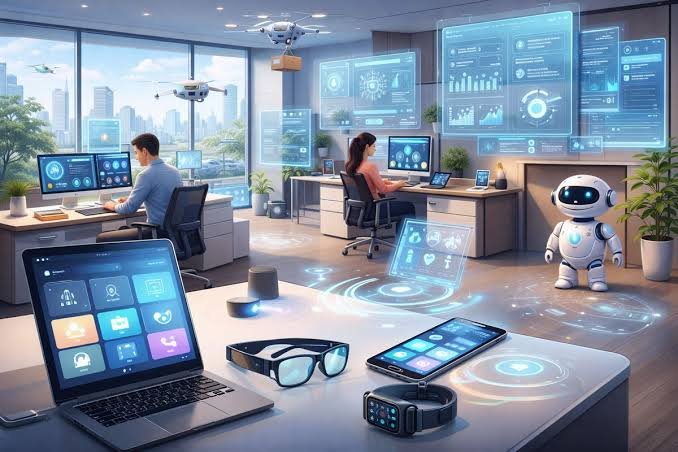
Smart homes may become better at managing energy, security, lighting, and comfort. Healthcare systems may provide more personalized support, while businesses may use intelligent analytics to make faster strategic decisions.
However, technological progress should be accompanied by responsible development. Security, privacy, fairness, transparency, and human oversight will remain essential. The most useful intelligent systems will not simply be powerful; they will also be reliable, understandable, and designed around real human needs.
Frequently Asked Questions
1. What are Intelligent Systems?
Intelligent Systems are technology-based systems that can process information, recognize patterns, learn from data, solve problems, and make decisions. They commonly use artificial intelligence, machine learning, sensors, and advanced algorithms.
2. How are Intelligent Systems different from traditional software?
Traditional software generally follows predefined instructions. Intelligent systems can analyze data, recognize patterns, adapt to new information, and make decisions based on changing circumstances.
3. Where are Intelligent Systems used?
They are used in healthcare, education, transportation, manufacturing, finance, retail, agriculture, customer service, cybersecurity, and smart-home technology. Their applications continue to expand as AI and machine learning improve.
4. Can Intelligent Systems learn by themselves?
Some intelligent systems can learn from data through machine learning techniques. However, they still require appropriate design, training data, monitoring, and human oversight. They do not automatically understand everything in the way a human does.
5. What are the main benefits of Intelligent Systems?
Major benefits include faster data processing, improved efficiency, automation, pattern recognition, better forecasting, consistent performance, and support for complex decision-making.
6. Are Intelligent Systems completely reliable?
No. Their performance depends on factors such as data quality, system design, training, and the environment in which they operate. They can make incorrect or biased decisions, which is why testing and human oversight are important.
7. Do Intelligent Systems replace human workers?
They can automate certain repetitive tasks, but they do not necessarily replace entire jobs. In many situations, intelligent technology works alongside people and allows employees to focus on tasks requiring creativity, judgment, communication, and problem-solving.
8. What is the future of Intelligent Systems?
The future will likely bring more connected, personalized, and autonomous technologies. Intelligent systems are expected to become increasingly common in homes, workplaces, healthcare, transportation, and public services while greater attention is given to safety, privacy, fairness, and responsible use.
Conclusion
Intelligent Systems are becoming an important part of modern technology. Their ability to process information, recognize patterns, learn from data, and make decisions has opened new possibilities in healthcare, education, transportation, manufacturing, business, and many other fields.
Although these systems offer major benefits, they also require careful management. Issues such as privacy, bias, security, transparency, and employment cannot be ignored. As technology continues to advance, the goal should be to create systems that support people rather than simply automate tasks.
When developed responsibly, intelligent technology can make everyday processes more efficient, improve decision-making, increase safety, and help organizations solve complex problems. The future of technology will likely depend not only on how intelligent our systems become, but also on how wisely we choose to use them.